Traffic Control Person
Traffic Control Persons
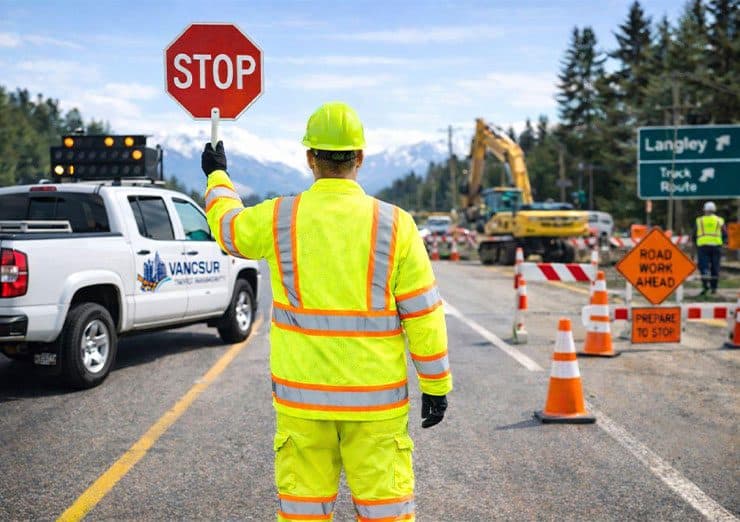
A Traffic Control Person directs vehicle and pedestrian traffic through and around an active work zone. On a live roadway they are the control between your crew and moving traffic — positioning, signalling, holding and releasing, and adjusting as conditions change.
01Traffic Control Person
What a TCP does
The work is judgement, not just standing there. A TCP reads sightlines, approach speeds and queue length, and knows when a setup has stopped being safe.
02Traffic Control Person
When you need one
If you are unsure whether a TCP is required, the answer usually comes out of the traffic management plan. We can tell you before you commit.
- Work occupies or encroaches on a travelled lane
- Equipment enters or exits a live roadway
- Sightlines or road geometry are altered
- A closure requires vehicles to be held and released
- Your hazard assessment or permit condition specifies it
03Traffic Control Person
Certification
Our TCPs are certified through the BC Construction Safety Alliance TCP program — British Columbia’s established standard.
| Requirement | Standard |
|---|---|
| Course | Two days |
| Written exam | 80% minimum |
| Practical evaluation | 100% required |
| Certification validity | Three years |
| Registration | BCCSA Gateway |
04Traffic Control Person
Shifts and mobilisation
Day, night, weekend and rotating shifts. Night work on arterials is common and carries different requirements — lighting, higher-visibility apparel, and setups that account for lower conspicuity and higher approach speeds.
05Traffic Control Person
What comes with the crew
Certified personnel, high-visibility apparel to standard, hand signalling devices, and the signage the plan calls for. If the plan requires devices beyond a standard setup, we will say so in the quote rather than on the day.