
Lane Closure Technician
Lane Closure Technicians
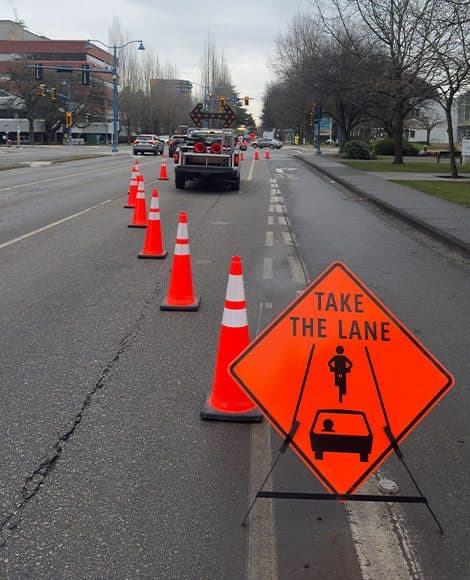
A Lane Closure Technician builds and maintains the closure itself. Advance warning signage, the transition taper, the buffer, the work area and the termination — placed at the spacings the plan specifies, then maintained for the life of the closure.
01Lane Closure Technician
A closure is not a static object
Devices get struck, moved and stolen. Conditions change. The technician’s job continues after setup.
02Lane Closure Technician
TCP or LCT — which do you need?
A fair question, and the answer is often both.
| Traffic Control Person | Lane Closure Technician | |
|---|---|---|
| Focus | Directing traffic | Building and maintaining the closure |
| Deals with | Vehicles and pedestrians in real time | Signs, cones, barricades, delineation |
| Typical use | Holding and releasing at a work zone | Highway and arterial closures, long duration |
03Lane Closure Technician
Closure types
- Single-lane closure on a multi-lane roadway
- Shoulder and parking lane closures
- Alternating single-lane with traffic control at each end
- Full closure with signed detour
- Rolling and mobile closures for moving work
- Sidewalk closures with pedestrian detour — often the part that gets missed
04Lane Closure Technician
Standards
Device selection, spacing and taper length come from the BC Traffic Management Manual 2020 and the Ministry of Transportation and Infrastructure’s Traffic Management Manual for Work on Roadways. Spacing is a function of posted speed, not preference — which is why a closure that looks fine can still fail an inspection.